← Back to Georgia on the map
Black America · The Sea Islands

Who are the Gullah Geechee people?

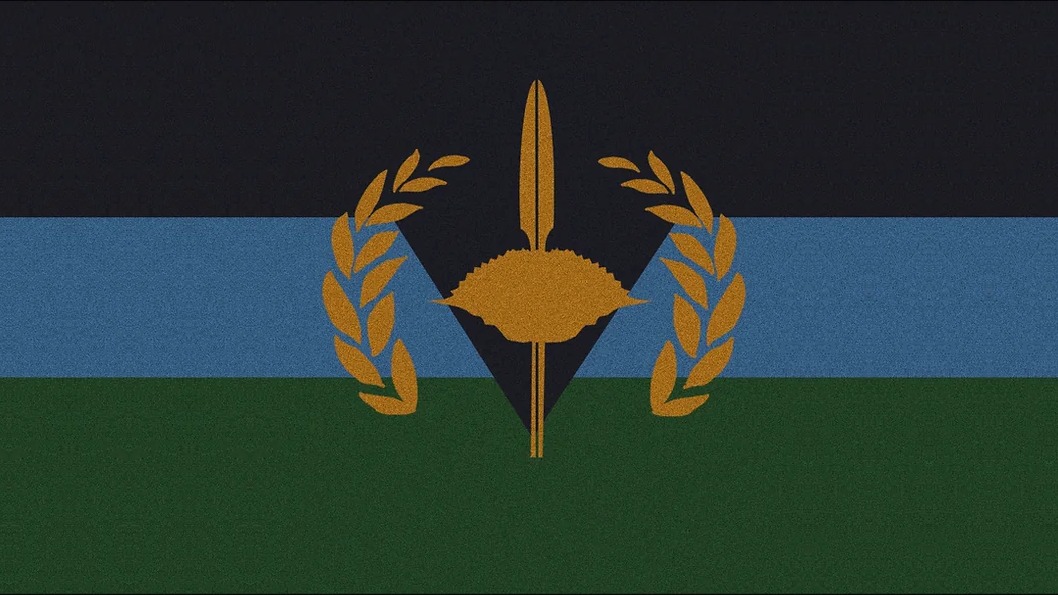
Gullah Geechee flag

The Gullah Geechee are a Black American people of the Sea Islands and coastal Lowcountry, from North Carolina to Florida. Their language, faith, food, music, and art carry living roots in West and Central Africa, and their communities are still here today.1

4states along the coast: North Carolina, South Carolina, Georgia, and Florida
~80barrier islands in the Gullah Geechee Cultural Heritage Corridor
30+African languages that helped shape the Gullah Geechee language
1949the year Lorenzo Dow Turner published his landmark study of Gullah
The names

Gullah, Geechee, or both?

Both names describe the same family of communities. People in South Carolina’s Lowcountry have most often said Gullah, while people in coastal Georgia and northeast Florida have most often said Geechee. Today many people use Gullah Geechee to honor the whole culture.1

Where the words came from is still debated. Scholars have suggested links to the Gola people of Sierra Leone and Liberia, to Angola, and, for Geechee, to Georgia’s Ogeechee River. No single answer has been proven.

Roots in Africa

Knowledge that crossed an ocean.

Gullah Geechee people descend from Africans brought from the regions of present-day Senegal, Guinea, Sierra Leone, Liberia, Côte d’Ivoire, and Angola.1 Many came from West Africa’s “Rice Coast,” where farmers had grown rice for generations.4

That expertise built the rice fields of coastal Carolina and Georgia, from the dikes and floodgates to the hand tools and fanner baskets used to clean the grain.5 Because so many people shared the same roots and lived in close-knit island communities, they kept a remarkable amount of their African heritage in language, faith, and daily life.4

A language of its own

Gullah is a language, not broken English.

Gullah Geechee, also called Sea Island Creole, is a creole language. It blends English with words, grammar, and sounds from more than 30 African languages.23 Linguists consider it endangered, which makes every speaker, story, and recording precious.1

The scholar who proved its African roots was Dr. Lorenzo Dow Turner, a Black linguist who led the English departments at Howard University and Fisk University. He spent years recording Gullah speakers and published Africanisms in the Gullah Dialect in 1949. He is often called the father of Gullah studies.37

Words shared with Sierra Leone

Gullah has a close cousin in Krio, the language spoken across Sierra Leone. Here are a few words the two share:4

  • bigyaigreedy
  • pantapon top of
  • tifto steal
A Georgia story

The song that found its way home.

In 1933, Lorenzo Dow Turner visited Harris Neck, a coastal community south of Savannah, Georgia. There he recorded Amelia Dawley singing a song her family had passed down for generations. No one in the family knew what the words meant.2

Decades later, researchers identified the song as Mende, a language of Sierra Leone. With about 50 words, it may be the longest text in an African language ever kept alive by an African American family.2

  1. 1933Turner records Amelia Dawley in Harris Neck, Georgia.
  2. 1949Turner publishes the song in Africanisms in the Gullah Dialect.
  3. 1990Ethnomusicologist Cynthia Schmidt finds Baindu Jabati in Senehun Ngola, Sierra Leone, singing nearly the same song.
  4. 1997Amelia’s daughter, Mary Moran, travels to Sierra Leone and meets Baindu Jabati. Their story becomes the 1998 film The Language You Cry In.
Gullah Geechee Georgia

Where to see the culture in Georgia.

Sapelo Island · McIntosh County

Hogg Hummock

Reachable only by ferry or boat, Hogg Hummock on Sapelo Island is considered one of the last intact island-based Gullah Geechee communities in the country.6

Many residents descend from Bilali Muhammad, a Muslim scholar born in Timbo, in the Fouta Djallon region of present-day Guinea. He wrote a 13-page manuscript in Arabic script, now held at the University of Georgia.8 His descendant, author Cornelia Walker Bailey, called him “the first of my ancestors I can name.”

Bolden · McIntosh County

The ring shout

The ring shout is a centuries-old tradition of worship, song, and movement. Shouters move counterclockwise in a ring with a shuffling step, a songster leads, the “basers” answer, and a stick keeps the beat on a wooden floor.9

The McIntosh County Shouters keep the tradition alive and received a National Heritage Fellowship from the National Endowment for the Arts in 1993.9

Riceboro · Liberty County

Geechee Kunda

Geechee Kunda is a museum and community education center with exhibits, classes, and a family research center for people tracing their roots.10

Farther south, Cumberland Island is still home to Geechee descendants and has a museum about their history.10

Protecting home: In January 2026, McIntosh County voters chose by more than 5 to 1 to repeal a 2023 zoning change that would have allowed much larger houses in Hogg Hummock. Residents had organized for more than two years to protect their land and way of life.11

Living traditions

Culture you can taste, hear, and hold.

Sweetgrass baskets

Coiled by hand from sweetgrass, bulrush, and palmetto, these baskets carry a craft with deep West African roots.15

Rice, seafood, and okra

Gullah Geechee cooking centers on rice, seafood, okra, and field peas, with dishes like hoppin’ john and sweet potato pone.110

Stories and folklore

Storytellers pass down tales of haints and boo hags, along with proverbs and lessons that echo African and biblical traditions.1

Music and praise

Call-and-response songs, spirituals, and the ring shout tie worship and community together.9

Indigo

Indigo dyeing is part of the culture’s long artistic tradition.1

Homecomings

Gullah Geechee families have made heritage journeys to Sierra Leone to reconnect with the places their ancestors came from.1

The corridor

A heritage that runs the length of the coast.

In 2006, Congress created the Gullah Geechee Cultural Heritage Corridor to recognize and protect this culture. It stretches from Wilmington, North Carolina, to Jacksonville, Florida, and reaches about 30 miles inland, taking in roughly 80 barrier islands.10

A federal commission of local representatives works with the National Park Service and community groups in all four states on research, education, and preservation.10

Wilmington, NC Charleston, SC Savannah, GA Sapelo Island, GA Jacksonville, FL ATLANTIC OCEAN
Learn together

Talk about it at home.

  1. Find Sapelo Island, Savannah, and Charleston on a map. How far is each one from where you live?
  2. Amelia Dawley’s family kept a song alive for generations without knowing what it meant. What songs, sayings, or recipes has your family passed down?
  3. Why do you think it matters to call Gullah a language and not “broken English”?
  4. Rice farmers from West Africa brought knowledge that built whole economies. What skills or knowledge do you carry from your family?
Sources

Read more.

  1. “Gullah people.” Encyclopædia Britannica. britannica.com
  2. “How the Memory of a Song Reunited Two Women Separated by the Trans-Atlantic Slave Trade.” Smithsonian Magazine. smithsonianmag.com
  3. “Word, Shout, Song Opens at the Anacostia Community Museum.” Smithsonian Magazine (on the Smithsonian exhibition about Lorenzo Dow Turner). smithsonianmag.com
  4. Opala, Joseph A. The Gullah: Rice, Slavery, and the Sierra Leone-American Connection. Gilder Lehrman Center, Yale University. macmillan.yale.edu
  5. Carney, Judith A. Black Rice: The African Origins of Rice Cultivation in the Americas. Harvard University Press, 2001.
  6. “Sapelo Island.” Gullah Geechee research guide, College of Coastal Georgia Library. libguides.ccga.edu Also see Cornelia Walker Bailey and Christena Bledsoe, God, Dr. Buzzard, and the Bolito Man (2001), and Melissa L. Cooper, Making Gullah (2017).
  7. Turner, Lorenzo Dow. Africanisms in the Gullah Dialect. University of Chicago Press, 1949.
  8. “Bilali Mohammed.” New Georgia Encyclopedia. georgiaencyclopedia.org
  9. “McIntosh County Shouters.” New Georgia Encyclopedia. georgiaencyclopedia.org
  10. “Gullah Geechee Cultural Heritage Corridor.” National Park Service. nps.gov
  11. “Results: McIntosh County zoning vote.” The Current GA, January 20, 2026. thecurrentga.org

This page was written for families and young learners. If you are a Gullah Geechee community member or scholar and see something we should add or correct, please contact us.